
what-is-blind-resume-screening
What Is Blind Resume Screening? Steps, Benefits, And DEI
Every recruiter carries bias, whether they realize it or not. A candidate's name, university, or address can shape a hiring decision before their qualifications even get a fair look. Blind resume scre...
Written by: Saply Team

Every recruiter carries bias, whether they realize it or not. A candidate’s name, university, or address can shape a hiring decision before their qualifications even get a fair look. Blind resume screening is a process designed to strip that identifying information from resumes so reviewers evaluate candidates purely on skills, experience, and fit. It’s one of the most practical steps a staffing agency can take toward building a fairer, more effective hiring pipeline.
The concept sounds simple, but execution raises real questions. What exactly gets removed? Who handles the redaction? And does it actually move the needle on diversity and inclusion? This article breaks down how blind resume screening works step by step, what benefits it delivers, and where it fits into a broader DEI strategy. For recruitment teams using tools like Saply to format and tailor CVs at scale, understanding this process matters, because how you present a candidate should always start with what they can do, not who they appear to be.
What blind resume screening includes
At its core, blind resume screening involves removing or masking any information on a resume that could trigger conscious or unconscious bias in a reviewer. This isn’t just about hiding a candidate’s name. The scope of redaction covers multiple categories of personal data, and the specific details you remove depend on your organization’s bias risks and the hiring outcomes you want to improve.
The more consistently you apply redaction across every resume, the more reliable your screening results become.
Personal identifiers that get removed
The most common items to redact are the ones that signal identity before a reviewer reads a single bullet point. Candidate names are the most obvious target, since research has consistently shown that names associated with certain ethnic or racial groups receive fewer callbacks even when qualifications are equal. Beyond names, addresses and zip codes often get removed because location can correlate with socioeconomic background or neighborhood demographics.
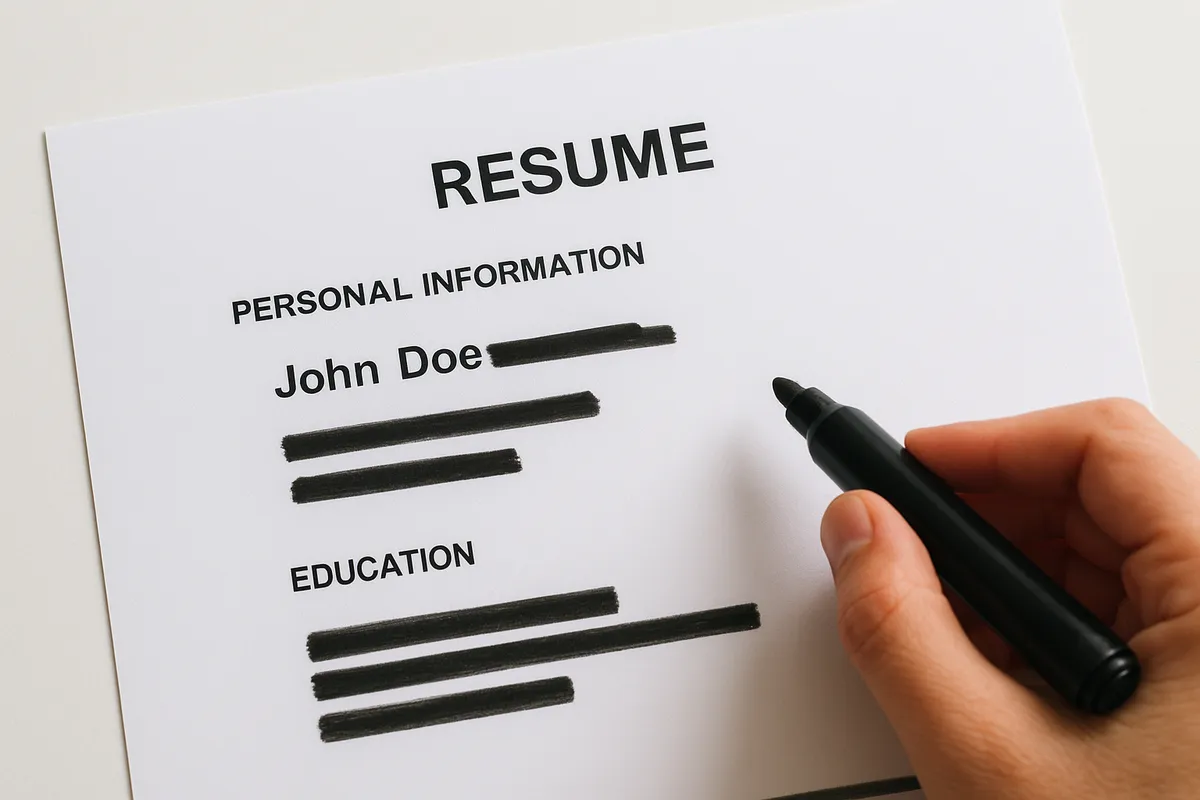
Other typical redactions include graduation years, which reveal age, and university names, which can introduce prestige bias. Many teams also remove photos and profile links like LinkedIn URLs, since those can expose gender presentation, age, and ethnicity in a single click.
Skills and experience that stay visible
Blind screening is not about hiding a candidate’s qualifications. Work history, job titles, and measurable achievements remain fully visible so reviewers can assess actual fit for the role. The goal is to let the track record speak first, before any assumptions form.
Technical skills, certifications, and years of experience in specific functions stay on the resume because those are the signals that drive sound hiring decisions. Your reviewers still get everything they need to evaluate capability. They just lose the cues that push decisions off course before that evaluation even begins.
Why teams use blind screening for DEI
Diversity, equity, and inclusion goals often stall at the resume review stage. Unconscious bias is fastest to act when reviewers process high volumes of applications quickly, which is exactly the condition most staffing teams work under. Blind screening creates a structural barrier that slows that bias down.
The bias problem blind screening targets
Research shows that callback rates vary significantly by name alone, with candidates from underrepresented groups receiving fewer interview invitations despite identical qualifications. Teams use blind resume screening because it addresses this problem at the source, removing the data that triggers biased snap judgments before any evaluation begins.
Bias doesn’t require bad intent. It surfaces in fast decisions made under pressure, which is the standard condition for most resume reviews.
What DEI outcomes actually improve
When name, address, and university information are removed, hiring pools tend to diversify at the screening stage. You start seeing candidates advance based on demonstrated skills and relevant experience rather than credentials tied to privilege or familiarity. That shift produces a more accurate picture of the actual talent pool available to your clients.
How blind resume screening works step by step
Understanding what is blind resume screening in practice means following a clear sequence. You don’t strip information randomly. Each step builds on the previous one to ensure the process is consistent, auditable, and actually reduces bias rather than just appearing to.

Prepare and redact the resumes
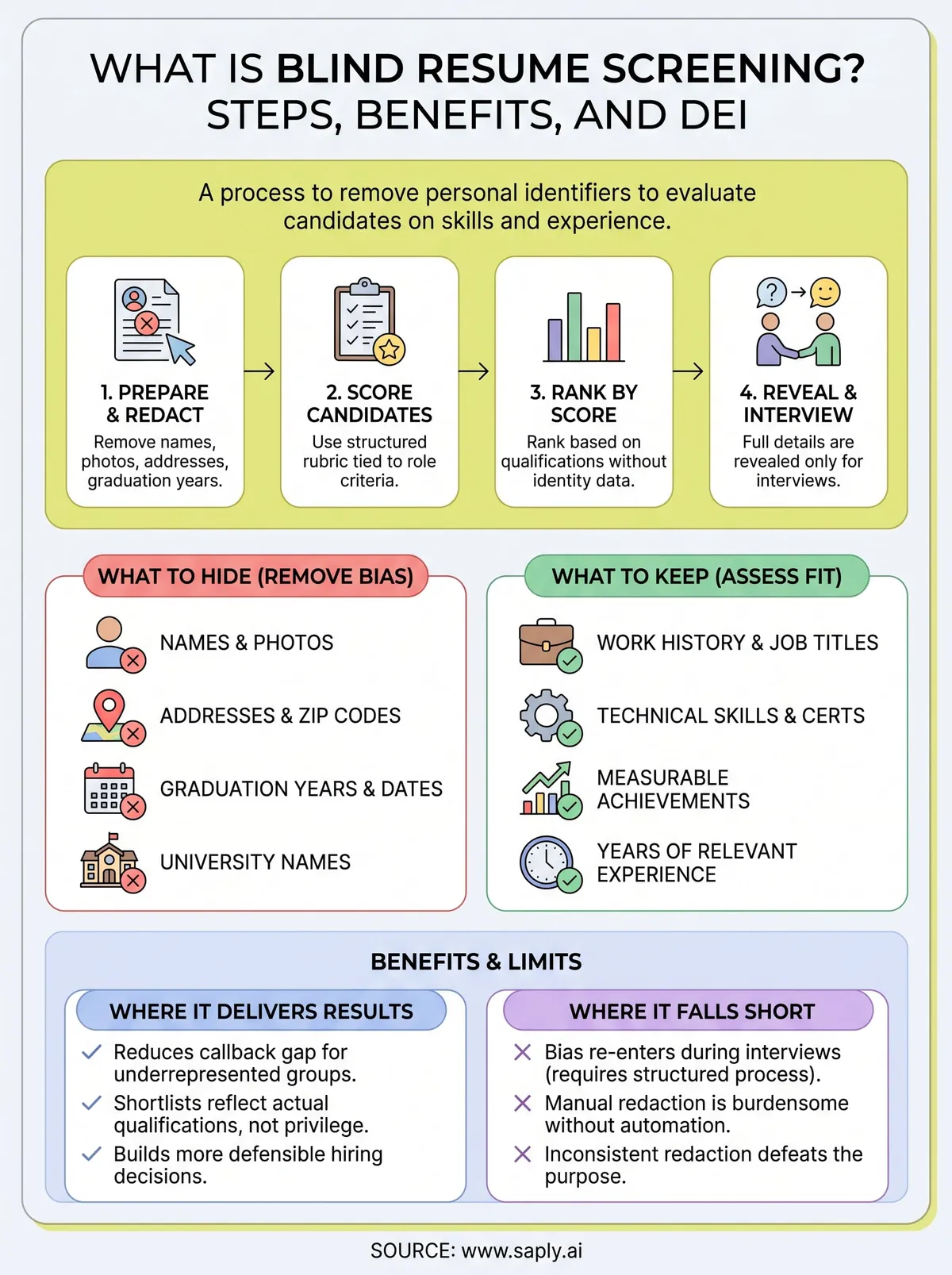
Your first step is collecting all incoming resumes into a single location before any reviewer touches them. A designated team member or automated tool then removes identifying fields, including names, addresses, photos, graduation years, and any links that expose personal details. You apply this redaction uniformly across every submission so no candidate gets treated differently based on format or source.
Inconsistent redaction is as damaging as no redaction at all, because it reintroduces the bias you were trying to remove.
Score candidates against the role criteria
Once redacted, each resume goes to reviewers with a structured scoring rubric tied directly to the job requirements. Reviewers score candidates on relevant skills, experience, and measurable achievements without access to identity data. You then rank candidates by score before any names are revealed, so your shortlist reflects actual qualifications. Only at the interview stage do full candidate details come back into view.
What to hide and what to keep
Knowing what is blind resume screening in theory is one thing. Applying it correctly in practice is another. The line between what you redact and what you preserve determines whether your screening process actually reduces bias or just adds an extra administrative step.
Information to remove before review
Remove any field that signals identity before a reviewer evaluates qualifications. Names and profile photos are the highest priority since they expose gender, ethnicity, and age instantly. Beyond those, redact addresses, graduation years, and university names, because all three can introduce socioeconomic and prestige bias without adding anything relevant to job performance.
Removing too little leaves bias intact. Removing too much strips context that reviewers need to make a sound decision.
Information to keep visible
Your reviewers still need a complete picture of what a candidate can do. Job titles, work history, and measurable results stay on every resume because they reflect real capability. Technical skills, certifications, and years of experience in specific functions also remain visible.
Industry experience and relevant accomplishments give reviewers the evidence they need to rank candidates accurately against your scoring rubric. The goal is not a blank document. It is a document where qualifications lead and identity follows.
Benefits and limits of blind screening
Understanding what is blind resume screening also means knowing where it helps and where it stops. The process reduces bias at the screening stage, but it does not eliminate it from your entire hiring workflow.
Where blind screening delivers results
Removing personal identifiers cuts the callback gap between candidates from underrepresented groups and those from majority groups. Your shortlists start reflecting actual qualifications rather than name recognition or credential prestige, which gives your clients a stronger talent pool.
The strongest benefit is not just fairer hiring. It is a more accurate picture of who can actually do the job.
Your team also builds more defensible hiring decisions because every shortlist ties directly to a scored rubric, not gut instinct.
Where blind screening falls short
Bias re-enters the process the moment a candidate joins an interview. Structured interviews and consistent evaluation rubrics are essential to carry fairness gains past the resume stage.
Manual redaction at scale also adds significant administrative burden. Without automation or a clear workflow, inconsistent removal of data across submissions defeats the purpose of the process entirely.
Key takeaways and next steps
What is blind resume screening comes down to one core idea: remove the personal identifiers that trigger bias before any reviewer evaluates a candidate’s qualifications. Names, addresses, graduation years, and photos come out. Skills, work history, and measurable results stay in. The process directly targets the stage where bias moves fastest, which is the first pass through a stack of resumes.
Blind screening gives you more accurate shortlists and more defensible hiring decisions, but it works best when you pair it with structured interviews and consistent scoring rubrics. Redacting resumes without fixing what comes after only shifts where bias enters, not whether it does. The strongest results come from treating blind screening as one layer of a broader fair-hiring process.
Your team’s submission speed and accuracy also matter. Saply helps you format and tailor candidate CVs consistently at scale, so the qualifications stay front and center and every submission reflects what the candidate can actually do.